How much does a billboard cost in 2026?
Billboards are a great way to advertise your business, but the cost can feel intimidating. Billboard costs depend on several factors, and understanding the broader outdoor advertising cost is important—billboards are just one part of OOH advertising (out-of-home advertising), the industry term for all outdoor media formats like billboards, transit ads, and digital displays. When evaluating your advertising expenses, it’s essential to understand how billboard costs vary by geographic location, billboard type, and market demand, since those factors drive pricing and potential return on investment.
Billboard costs depend on factors such as location, size, format, and audience demographics (age, gender, income, lifestyle), which influence both pricing and placement decisions. That’s because “billboard pricing” isn’t one number. It depends on the format (static vs digital), the market, the placement quality, and how the inventory is sold (monthly, 4-week cycles, daily, or rotation). The cost of billboard advertising also includes rental fees, design, installation, and other considerations—so it’s important to understand the full scope of what you’re paying for. In recent years, digital billboards have become more prevalent and are gradually replacing traditional billboards, unlocking more flexible buying and scheduling options.
In this guide, we’ll break down real-world cost ranges for billboard advertising, explain the factors that drive pricing, and show a more modern way to buy DOOH based on verified delivery (pay-per-play) instead of impression estimates.
Introduction to the Industry
The billboard advertising industry has changed quickly, fueled by the growth of digital billboard advertising. Outdoor advertising is now a core part of the modern marketing mix because it reaches people in the real world—where they commute, shop, and spend time—at a scale most channels can’t replicate.
Digital billboard advertising has pushed the category forward with dynamic content, real-time creative swaps, and more flexible scheduling. Instead of locking into one message for weeks, advertisers can run different creatives at different times of day, respond faster to market changes, and plan campaigns around actual audience presence.
How Much Does a Billboard Cost?
A billboard can cost anywhere from a few hundred dollars to tens of thousands of dollars for a typical run. As a simple planning baseline, the average billboard cost is around $2,500 per month, but it can move dramatically depending on market and placement.
Here are the planning numbers you should use for a four-week cycle:
-
National average (4-week rental): ~$3,953
-
Static (classic) billboards: $250 to $14,000 per cycle
In many markets, static billboards commonly fall in the $250 to $4,000 per month band for typical inventory. -
Digital billboards: $1,200 to $15,000 per cycle
-
Premium major-metro placements: $8,000 to $100,000+ for top inventory
A small billboard in a rural area can run as low as $200 per month, while premium downtown or highway placements in major cities can go far beyond that. Across the category, billboard rental costs often sit in the $1,000+ to $15,000+ per month zone depending on the market and format.
What Is the Average Cost of a Billboard Per Month in 2026?
Most OOH is sold in four-week (28-day) cycles, so “per month” usually means “per 4 weeks.”
A practical way to think about 2026 pricing:
-
Low-demand areas: plan near the lower end of static pricing ($250+ per cycle)
-
Everyday campaigns: often land around the four-week national average (~$3,953)
-
High-demand metros and premium placements: push into five figures and beyond
The billboard’s location is the biggest cost driver. High foot-traffic areas, major highways, commuter corridors, and dense city centers command higher prices because visibility is stronger and demand is higher. In some dense cities, monthly pricing can exceed $14,000 for certain placements.
Types of Billboards
Billboard advertising comes in several distinct formats, each designed to meet different marketing objectives and budgets. The most common types of billboards are static billboards, digital billboards, and mobile billboards.
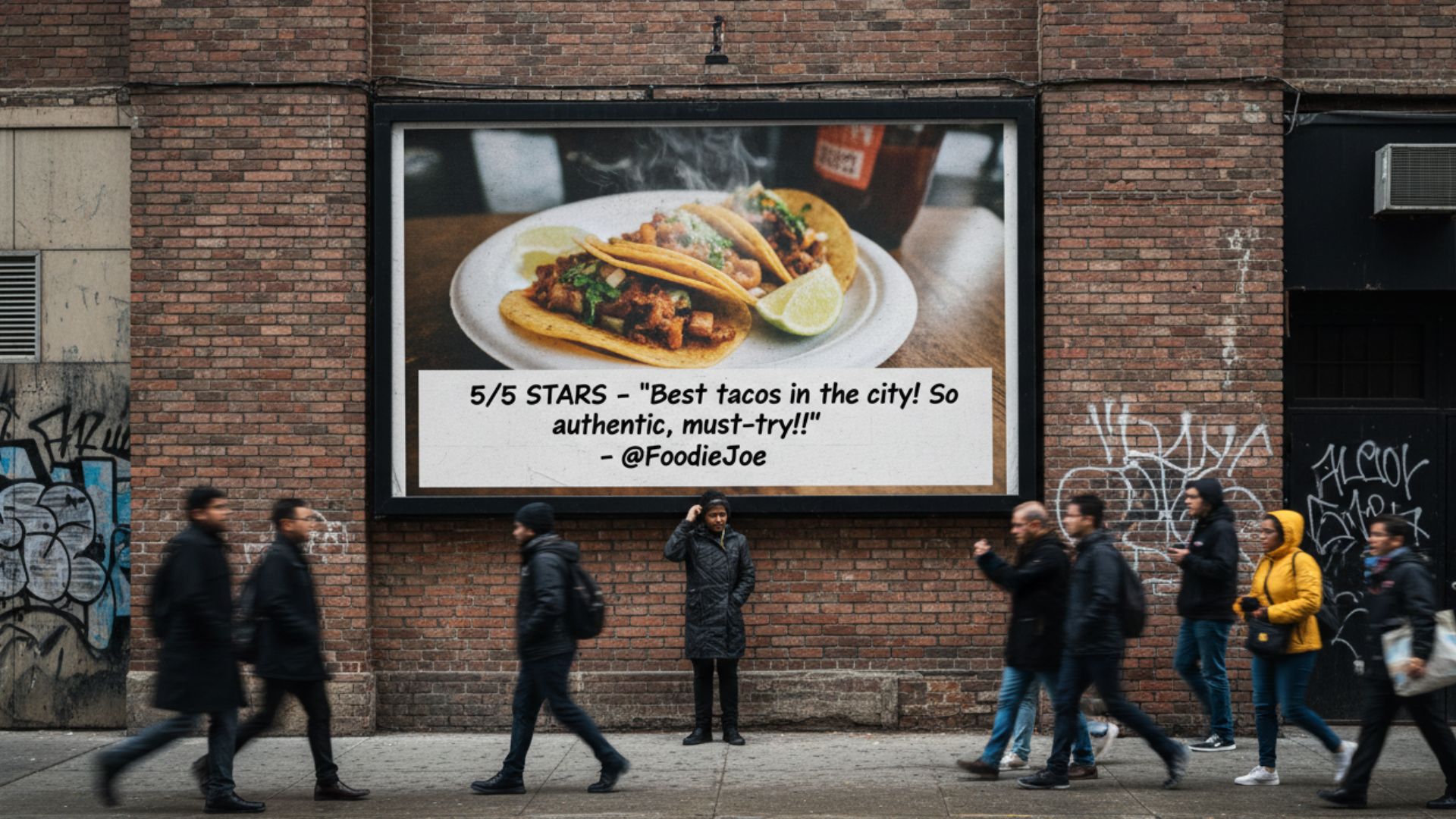
Static billboards are the classic form of outdoor advertising, featuring printed advertisements on large panels. These are ideal for long-term campaigns where the message doesn’t need frequent updates. Their visibility and size make them a staple along highways and in high-traffic areas.
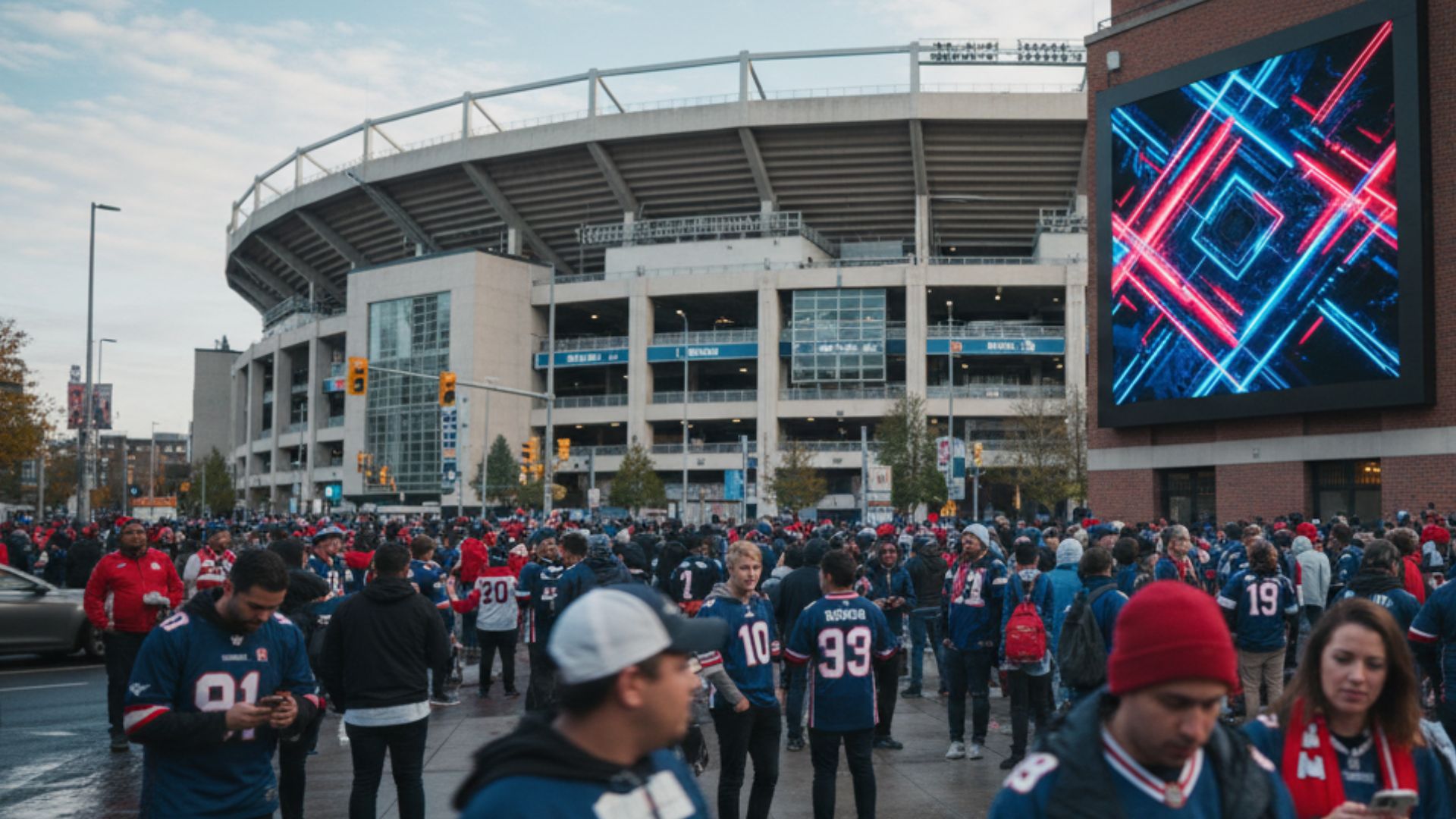
Digital billboards use LED screens to display dynamic content that can be updated in real time. Digital billboard advertising supports animated graphics, rotating messages, and dayparting—showing different ads at different times of day. This flexibility makes digital billboards a go-to option for time-sensitive messaging or multi-creative testing.
Mobile billboards take advertising on the road. Mounted on trucks or trailers, these can move through multiple locations, which can be useful for events, neighborhood coverage, or short burst campaigns.
Common Billboard Pricing Models
Billboards aren’t priced one way. Here are the models you’ll see most often:
-
Four-week (28-day) packages (common for both static and digital)
-
Calendar-month pricing (always confirm whether it’s actually 28 days or 30/31)
-
Per-play pricing (often used for short bursts or premium placements)
-
Share-of-voice (SOV) on digital loops (you buy frequency, not exclusivity)
-
CPM-style planning (you compare placements using estimated impressions)
How Much Does It Cost to Rent a Billboard for 4 Weeks?
A four-week campaign is the standard duration for most billboard rentals. Use these ranges to set expectations:
-
National average: ~$3,953
-
Static: $250 to $14,000 per cycle
-
Digital: $1,200 to $15,000 per cycle
Those ranges get you in the right neighborhood. The exact quote depends on the unit, visibility, direction of travel, read time, and availability.
Digital Billboard Cost in 2026
Digital billboards are typically more flexible than static (creative swaps, dayparting, multiple creatives), but pricing depends on market demand and rotation structure.
For planning, use these ranges:
-
Typical digital placement: $1,200 to $15,000 per month/cycle
-
Major city buys / premium screens: $15,000 to $50,000+ depending on the unit and package
Digital billboards may require more maintenance than traditional billboards due to their technology, but they also offer more control over schedule and message timing.
What Affects Billboard Rental Costs?
The biggest drivers are:
Location and demand
This is usually the #1 cost driver. Major interstates, downtown corridors, and high-traffic commuter routes command higher rates because they deliver higher exposure. Advertising space in premium corridors costs more—but it can also concentrate your spend into the highest-impact audience flow.
Format
Static and digital are priced differently. Digital often involves rotation, share-of-voice, and dayparting. The size of a billboard (square footage) impacts both cost and visibility. Ad duration—how long your ad runs—also plays a key role in total cost.
Placement quality
Two boards in the same city can have very different prices based on sightlines, direction of travel, speed of traffic, obstructions, and dwell time.
Seasonality and events
Rates move with availability, holidays, and event weeks. Costs often rise during high-demand periods and peak outdoor activity seasons.
Production costs (mostly for static)
Beyond the media rental fee, static boards usually come with added costs like design, printing, and installation/posting. Complexity drives production cost, and production impacts results—because readability and clarity matter more than almost anything.
OOH CPM Ranges (Static vs Digital)
CPM is often used to compare placements, but it’s important to remember that OOH impressions are modeled estimates, not the same thing as digital ad impressions.
For planning, use these CPM ranges:
-
Standard billboard CPMs: roughly $6 to $10
-
Marquee locations (example: Times Square-level outliers): often $15 to $25
-
Broader OOH planning ranges: roughly $2 to $9 depending on market and format
CPM can help you compare options, but DOOH performance improves when you optimize around delivery, timing, and real outcomes—not just an impression model.
Times Square Billboard Cost Per Day in 2026
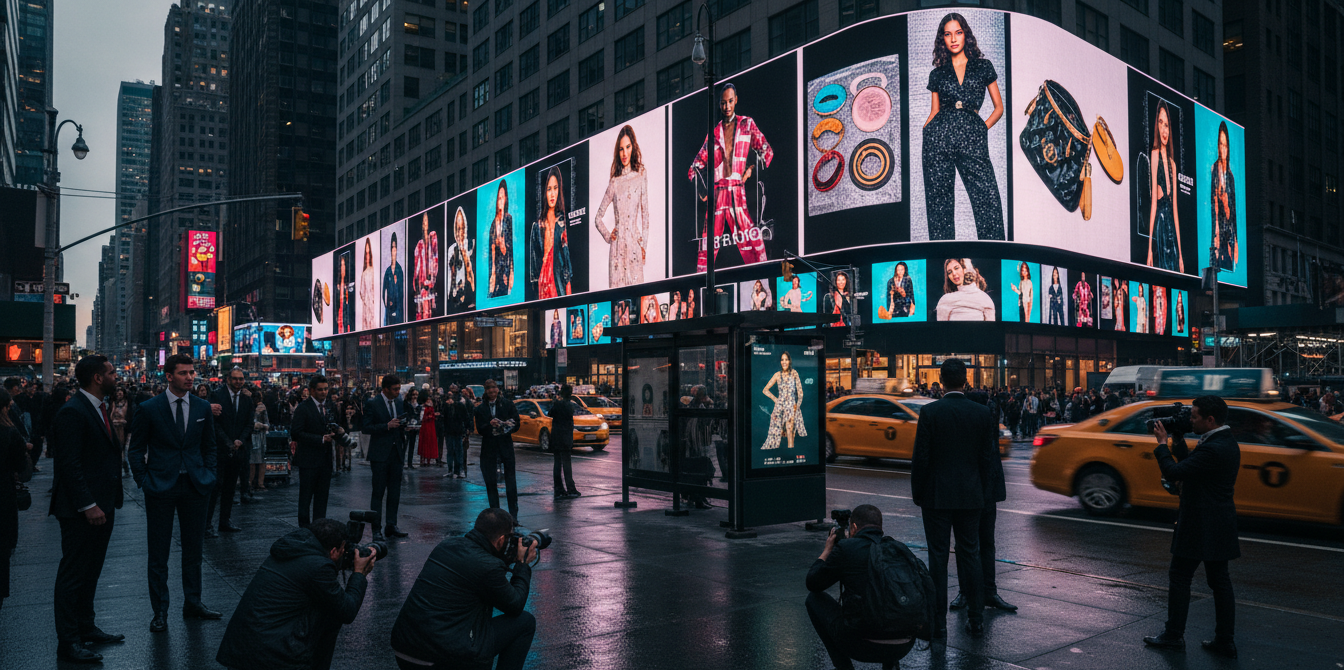
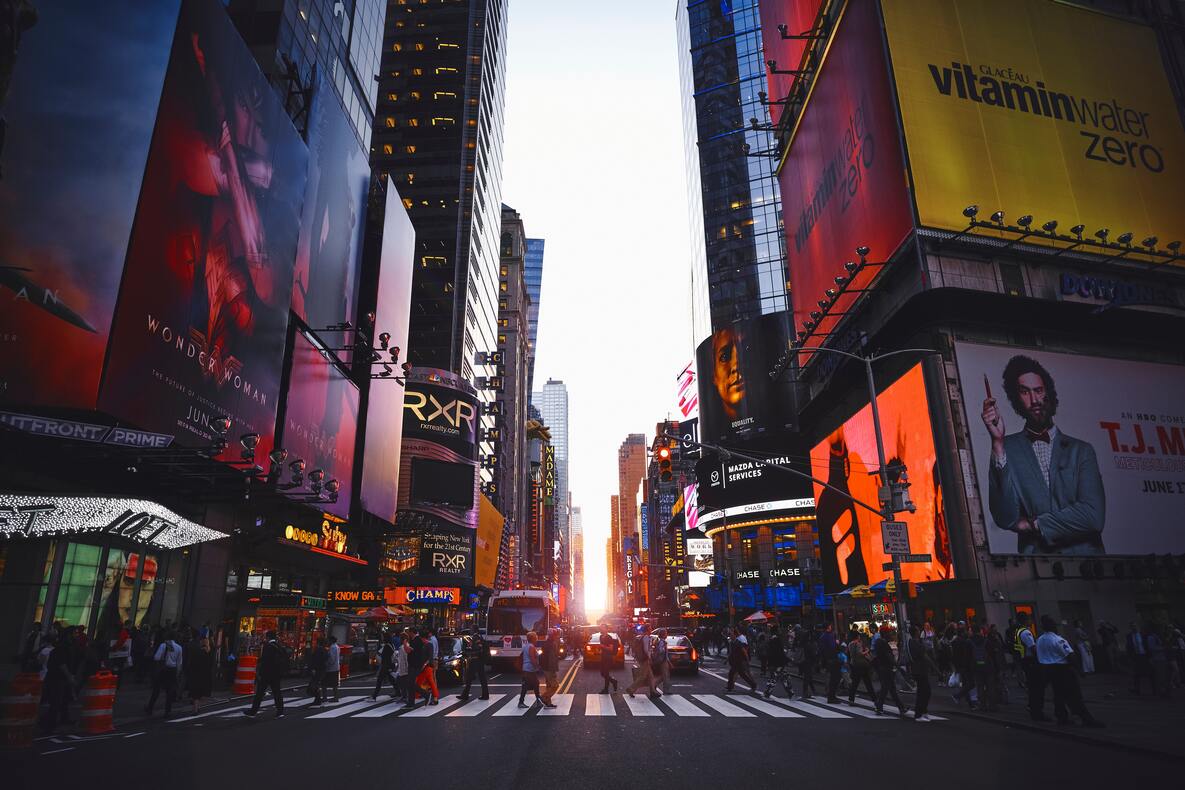
Times Square is a premium outlier, and “Times Square cost” depends on what you buy (a shared slot vs a flagship screen vs a takeover). For certain premium inventory, monthly pricing can exceed $50,000 to $100,000+.
If you’re buying a specific marquee unit, the rules can be different. For example, Blindspot’s Times Square One listing is available for daily booking (not hourly), and the minimum required booking includes 720 plays, with an estimated exposure figure provided for that minimum.
Blindspot Pricing: Pay Per Play, Booked by the Hour
Traditional OOH planning often revolves around CPM and impression estimates. Blindspot is built for performance-driven DOOH, so the pricing model is different.
With Blindspot, you buy DOOH by the hour and pay per play, with transparent logs. That means you’re paying for verified ad delivery (plays), not just an impression estimate. Users can sign up for a free account to get started.
Blindspot also operates at scale: over 2,500,000 digital billboards in 50+ countries.
Pay-per-play pricing benchmarks (Blindspot)
Pricing varies by screen, market, and hour. For this article, we’ll keep the floor simple and conservative:
-
Pricing can start as low as $0.15 per play (screen and time dependent)
-
Many competitive placements will be higher depending on demand, daypart, and availability
-
You control spend by choosing the exact locations and the exact hours you want to run
Simple pay-per-play math
Total cost = plays × price per play
If a placement is $0.15 per play:
-
2,000 plays ≈ $300
-
5,000 plays ≈ $750
-
10,000 plays ≈ $1,500
Your actual plan depends on how many screens you’re on, how many hours you’re buying, and what kind of frequency you want.
Recommended starter budgets (to test, then scale)
If you want clean budget tiers that map to real-world usage:
$500
A fast test. Great for proving creative, finding the right hours, and validating a few locations.
$2,500
A strong first campaign. Enough room to build frequency in the hours that matter, test multiple creatives, and learn what’s driving lift.
$5,000
A serious scale budget. Useful for multi-location coverage, higher-frequency schedules, or running across multiple neighborhoods/cities.
Streamlining Campaign Creation
Creating an effective billboard campaign starts with smart planning and a deep understanding of your target audience. By analyzing audience demographics and traffic patterns, businesses can pinpoint the best locations and times to reach the right people. Leveraging data and analytics is key to optimizing billboard campaigns, ensuring that your message appears when your audience is actually present.
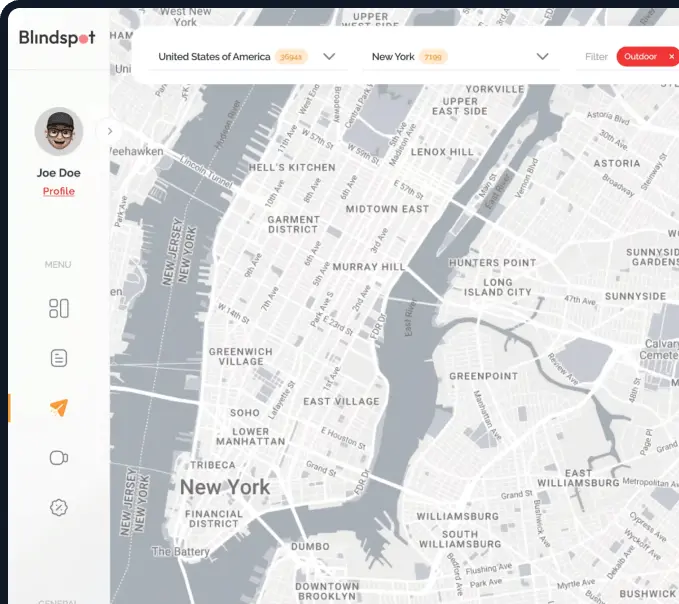
Digital billboard advertising platforms like Blindspot make it easier to launch and manage campaigns. You can select specific locations, specific hours, and creative rotations from a single dashboard. Programmatic digital out-of-home (pDOOH) takes this further with real-time targeting based on location and audience signals, making DOOH more efficient and measurable.
Small Business Advertising
For small businesses, billboard advertising—especially digital billboard advertising—can be a powerful way to reach a broad audience without committing to long, expensive placements. Digital formats create a lower barrier to entry than traditional month-long static commitments, and flexible scheduling helps small businesses focus spend on the most valuable hours.
Digital also allows for real-time creative updates, so small businesses can promote offers, launch new products, or react quickly without long production timelines. With the right strategy, digital billboards can reach a mass audience and produce measurable lift.
Comparing Advertising Options
Billboard advertising stands out for high visibility and real-world presence. Traditional billboards are effective for brand awareness and commuter reach. Digital billboards offer more flexibility—multiple creatives, time-of-day targeting, and tighter testing loops.
Digital marketing channels offer precise targeting and click-based measurement, but attention is fragmented. Billboard advertising complements digital by building memory and demand in the real world—then digital captures that demand.
Negotiating Prices
Getting the best value from billboard advertising comes down to strategic planning. Costs vary by location, size, and campaign length. Digital billboard pricing can also vary by daypart, because the hours you choose matter.
With Blindspot, the optimization lever is simple: choose the hours and locations that align to your audience and goal. That’s how you control cost without sacrificing impact.
Finding the Best Rates for Your Billboard Campaign
If you want the best value (not just the lowest quote), focus on:
-
Pick the goal first
Store visits, awareness, event attendance, recruiting, product launches all want different placements and schedules. -
Compare like-for-like inventory
Compare visibility, traffic patterns, direction of travel, and read time—not just price. -
Use dayparting to control cost
Run during the hours when your audience is actually there. -
Start small, then scale
Test a handful of screens and hours, then put more budget behind what performs.
Measuring Success
Most OOH “measurement” falls into two buckets: planning metrics (modeled) and outcome metrics (what actually happened). The industry often leans heavily on the first bucket. Blindspot is built for the second.
How the rest of the industry typically measures OOH
Traditional OOH reporting usually centers on modeled exposure and planning metrics:
-
Modeled impressions (opportunity-to-see estimates)
-
CPM and “effective CPM” calculations based on those estimates
-
Estimated reach and frequency
-
Proof-of-posting style confirmation that a unit was live (not a play-by-play record of delivery)
-
Post-buy summaries that report aggregated averages rather than log-level delivery by hour and by placement
These metrics are useful for planning comparisons, but they are still estimates. They don’t tell you precisely what ran at the play level, and they don’t automatically connect to business outcomes.
How Blindspot measures success (and why it’s different)
Blindspot doesn’t treat modeled impressions as the success metric. Success starts with verified delivery and then ties that delivery to outcomes.
1) Verified delivery: cost per play, backed by delivery logs
Because Blindspot is pay-per-play and booked by the hour, you can measure exactly what happened operationally:
-
Total verified plays delivered
-
Cost per play (your true unit cost)
-
Delivery by hour/daypart (which hours actually ran)
-
Delivery by screen/location (what delivered the most for the spend)
-
Creative-level delivery (which message ran, where, and when)
2) Direct attribution: connect delivery windows to real outcomes
Blindspot measurement is designed to tie play logs and time windows to outcomes using your existing analytics:
-
Website sessions and conversions during scheduled hours (time-based lift)
-
Branded search lift during the same windows
-
Sign-ups, demos, purchases tracked via your analytics stack
-
Geo-based lift (exposed areas vs nearby control areas) when you want incrementality
Because you can run in tight windows (specific hours on specific screens), you can measure lift more cleanly than month-long “always on” buys. This makes it easier to see what’s working and scale the locations, hours, and creatives that drive results.
A simple performance-style measurement loop
-
Choose one primary outcome (conversions, demo requests, store visits, branded search)
-
Run in controlled hours on a tight set of screens
-
Compare on-hours vs off-hours and exposed vs control where relevant
-
Scale what produces the best lift per dollar
That’s the core difference: the traditional OOH world often optimizes around modeled exposure; Blindspot optimizes around verified delivery and measurable outcomes.
Best Practices for Billboard Advertising
Maximizing the impact of your billboard advertising starts with strategy. Choose locations that align with your audience’s daily routes. Keep the design bold, clear, and readable at a glance—short copy wins.
For digital billboard advertising, take advantage of dynamic content and scheduling. Use performance feedback to adjust hours, creative, and placements, and integrate your billboard campaigns with digital marketing to capture demand.
Billboard costs vary because the inputs vary: market demand, format, placement quality, and timing.
If you’re buying traditional OOH, expect static boards to land in the $250 to $14,000 per cycle range and digital in the $1,200 to $15,000 range, with premium metro inventory going much higher.
If you want a performance-style approach, Blindspot lets you buy DOOH by the play with transparent delivery logs, across 2.5M+ digital billboards in 50+ countries.
Billboard advertising remains one of the most effective ways to reach people at scale in the real world. Digital billboard advertising has made outdoor media more flexible, more accessible, and more measurable—especially when you combine verified delivery with direct attribution.
If you want predictable pricing and performance-style measurement, Blindspot gives you a modern way to run DOOH: pay per play, book by the hour, verify delivery, and measure real outcomes.
FAQs Related to Billboard Costs
How much does it cost to be put on a billboard?
It depends on market and format. A four-week run can start in the hundreds in low-demand areas and move into the five figures in major metros, with premium inventory higher.
Are billboards worth the money?
They can be, especially when your creative is built for fast readability and your placement matches where your audience actually moves.
Can you negotiate billboard prices?
Sometimes, especially with longer commitments or less competitive weeks and placements. You can also lower waste by shifting dayparts, locations, or duration.
Why are billboards so expensive?
The expensive ones are expensive because they’re scarce, highly visible, and in high-demand corridors with large audiences such as in TSQ.
Is a digital billboard cheaper than a static billboard?
Not always. It really depends on the location of the billboard but you can also find some hidden gems on high traffic corridors that are underpriced.